Zip Game


LinkedIn might be best known for networking and job hunting, but its Zip game has quietly become a daily favorite for many professionals. At first glance, Zip feels like a simple logic puzzle: players connect numbered cells in sequence, starting from 1, drawing a continuous path that fills the entire grid without crossing or skipping cells. But its appeal goes beyond casual fun.
LinkedIn quizá sea más conocido por el networking y la búsqueda de empleo, pero su juego Zip se ha convertido silenciosamente en un favorito diario para muchos profesionales. A primera vista, Zip parece un sencillo rompecabezas de lógica: los jugadores conectan celdas numeradas en secuencia, comenzando por el 1, trazando un camino continuo que llena toda la cuadrícula sin cruzarse ni saltarse celdas. Pero su atractivo va más allá de la diversión casual.
LinkedIn jest być może najbardziej znany z networkingu i poszukiwania pracy, ale jego gra Zip po cichu stała się codziennym ulubieńcem wielu profesjonalistów. Na pierwszy rzut oka Zip wydaje się prostą łamigłówką logiczną: gracze łączą ponumerowane pola w kolejności, zaczynając od 1, rysując ciągłą ścieżkę, która wypełnia całą siatkę bez przecinania się ani pomijania pól. Jednak jej atrakcyjność wykracza poza zwykłą, niezobowiązującą rozrywkę.
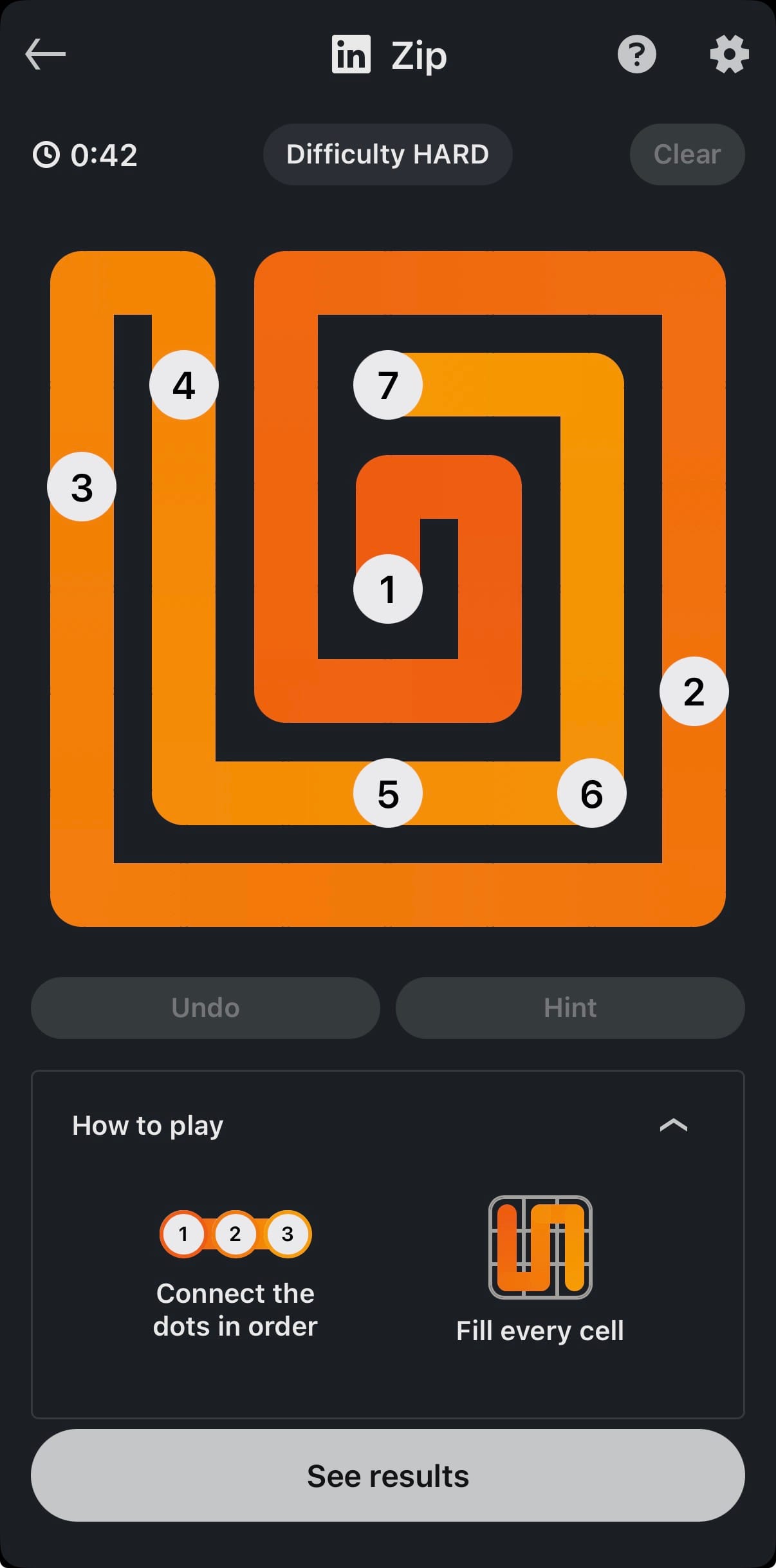
The brilliance of the Zip game lies in how perfectly it fits into a workday. It is quick, low-pressure, and easy to play during a coffee break or between meetings. Unlike more time-consuming games, Zip offers a short mental reset that sharpens focus and spatial reasoning without pulling you out of a professional mindset.
There is also a subtle social element. Like other daily puzzles on LinkedIn, players often share completion streaks, hints, or solve times, sparking light conversation and friendly competition among colleagues. On a platform built around professional connection, this shared experience adds a human layer to the feed.
Ultimately, the LinkedIn Zip game shows that productivity and play do not have to be opposites. Sometimes, a two-minute logic puzzle is exactly what your brain needs to reset, refocus, and get back to work a little sharper than before. In that sense, Zip is not a distraction from work, it is a cognitive pause designed for it.