Nobel Prize

Few honors carry as much prestige as the Nobel Prize. Awarded to individuals and organizations whose work has made an extraordinary impact on humanity, the Nobel Prize recognizes groundbreaking achievements in science, literature, peace, and economics. More than a century after its creation, it remains one of the most respected awards in the world.
Pocos honores gozan de tanto prestigio como el Premio Nobel. Otorgado a personas y organizaciones cuyo trabajo ha tenido un impacto extraordinario en la humanidad, el Premio Nobel reconoce logros revolucionarios en la ciencia, la literatura, la paz y la economía. Más de un siglo después de su creación, sigue siendo uno de los galardones más respetados del mundo.
Niewiele wyróżnień cieszy się tak wielkim prestiżem jak Nagroda Nobla. Przyznawana osobom i organizacjom, których działalność istotnie wpłynęła na losy ludzkości, Nagroda Nobla honoruje przełomowe osiągnięcia w nauce, literaturze, działalności na rzecz pokoju oraz ekonomii. Ponad sto lat po swoim ustanowieniu pozostaje jedną z najbardziej cenionych nagród na świecie.
The Creation of the Nobel Prize
The Nobel Prize was established by Alfred Nobel, a Swedish inventor, engineer, entrepreneur, and philanthropist best known for inventing dynamite. In his will, signed in 1895, Nobel directed that most of his fortune should be used to create prizes for people who had conferred “the greatest benefit to humankind.” After his death in 1896, his vision was carried out, and the first Nobel Prizes were awarded in 1901.
Nobel Prize Categories
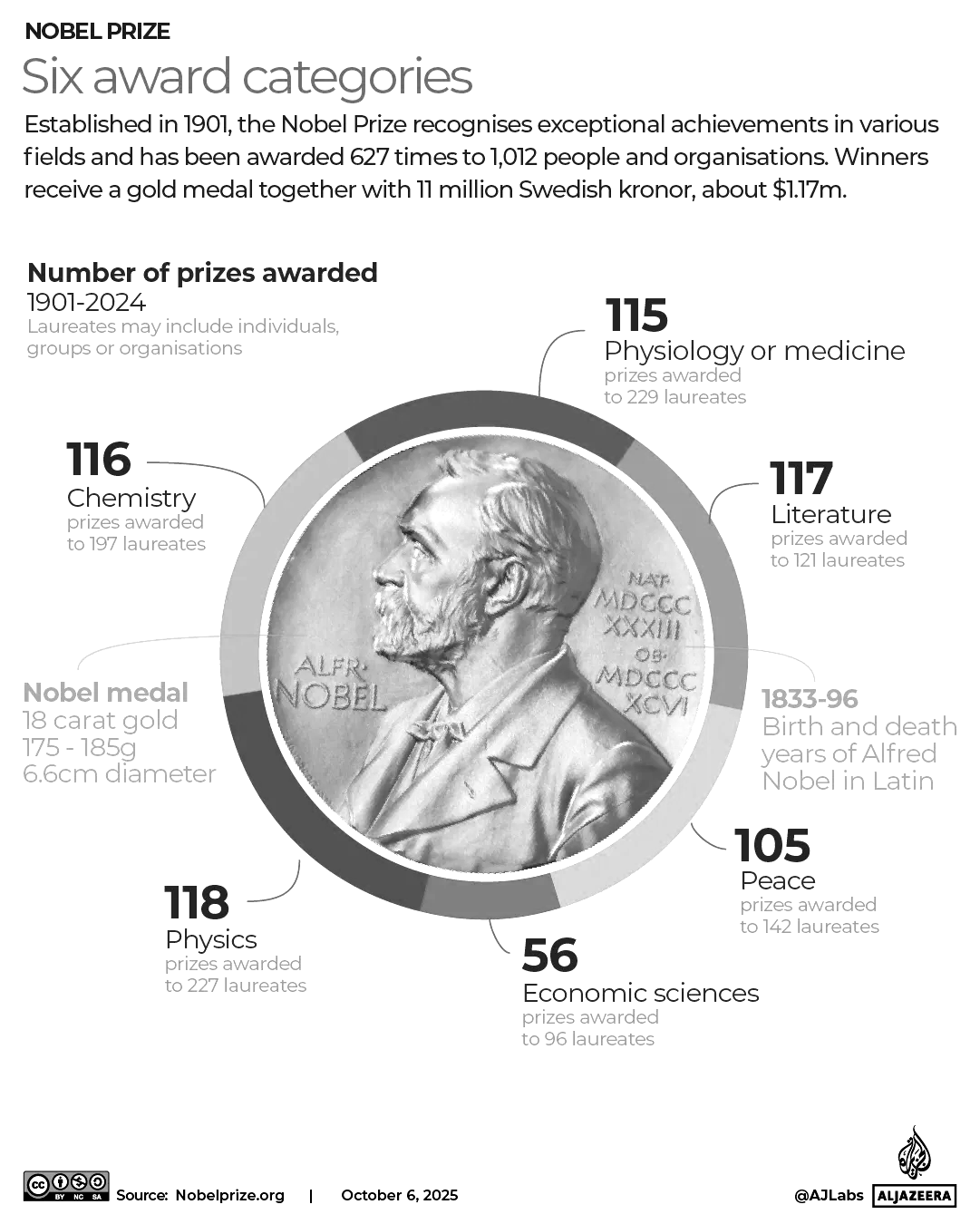
Today, Nobel Prizes are awarded in six categories:
- Physics
- Chemistry
- Physiology or Medicine
- Literature
- Peace
- Economic Sciences
The first five categories were specified by Alfred Nobel himself.
The Prize in Economic Sciences was added later, in 1968, by Sweden’s central bank in memory of Alfred Nobel.
The First Nobel Prize Winners
The first Nobel Prizes were awarded in 1901, with different winners in each category.
Some of the first laureates included:
- Wilhelm Conrad Röntgen – Physics (for the discovery of X-rays)
- Jacobus Henricus van ’t Hoff – Chemistry
- Emil Adolf von Behring – Physiology or Medicine
- Sully Prudhomme – Literature
- Henry Dunant and Frédéric Passy – Peace
These pioneering recipients set the standard for generations of Nobel laureates to come.
The Nobel Prize Award Package
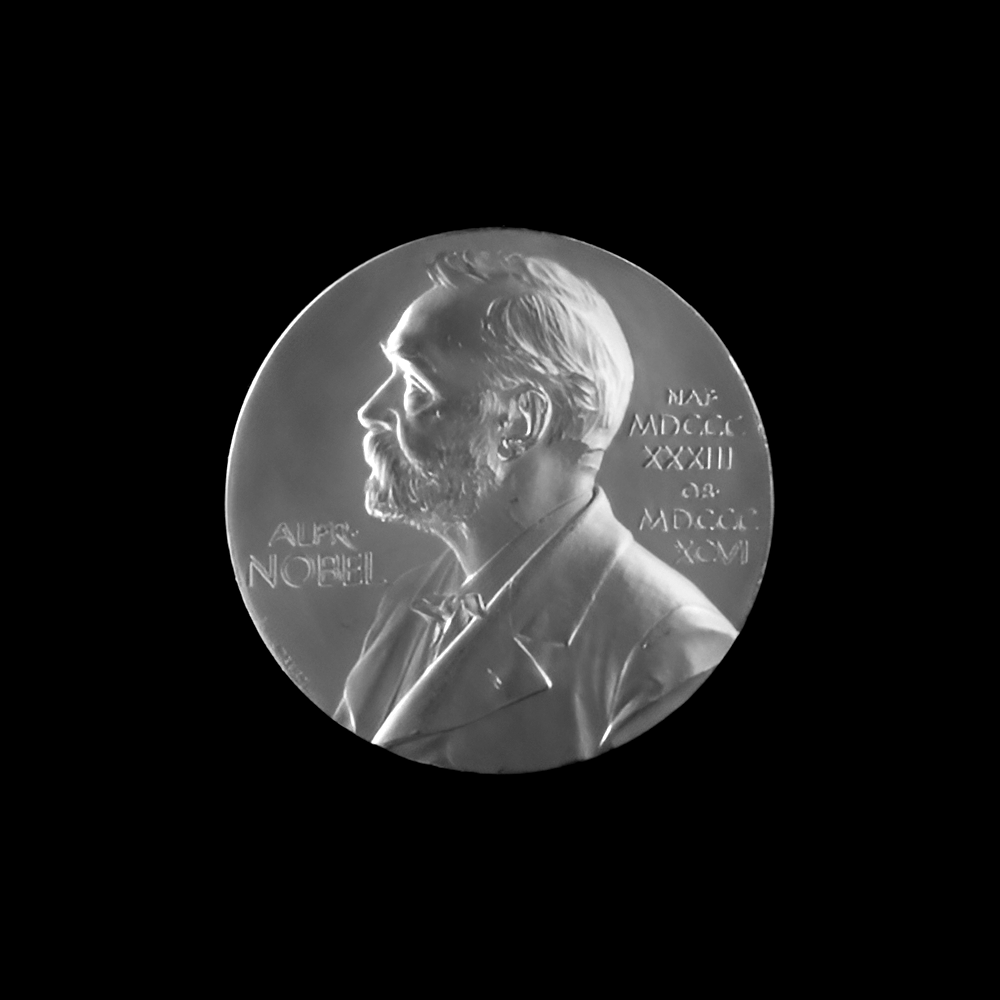
Nobel Prize laureates receive three awards: a medal, a diploma, and a cash prize. The monetary award is paid in Swedish kronor and is typically around 11 million SEK = 1 million EUR, though it may vary each year. If shared, the sum is divided between the winners. Each laureate receives a uniquely designed diploma and a gold medal made from 18-carat recycled gold, coated with 24-carat gold, with slight variations by category. The awards are presented at formal ceremonies in Stockholm, Sweden, and in Oslo, Norway for the Peace Prize, attended by royal families and international dignitaries.
The Most Important Nobel Prize
All Nobel Prizes are considered equal in prestige, but the Nobel Peace Prize often receives the greatest public attention.
Notable Peace Prize laureates include:
- Martin Luther King Jr.
- Nelson Mandela
- Mother Teresa
- The Dalai Lama
- Malala Yousafzai
Because of its global significance and political impact, it is often the most widely discussed Nobel award.
Some of the Latest Nobel Laureates
Recent Nobel Prizes continue to celebrate achievements that shape the modern world.
Among the 2025 laureates were:
- John Clarke, Michel H. Devoret, and John M. Martinis (Physics) for discoveries involving quantum phenomena in electrical circuits.
- Omar M. Yaghi, Susumu Kitagawa, and Richard Robson (Chemistry) for developing metal-organic frameworks, a breakthrough class of porous materials.
- Mary E. Brunkow, Fred Ramsdell, and Shimon Sakaguchi (Physiology or Medicine) for discoveries related to immune-system regulation.
- László Krasznahorkai (Literature) for his influential literary work.
- María Corina Machado (Peace) for her efforts in promoting democratic rights in Venezuela.
- Joel Mokyr, Philippe Aghion, and Peter Howitt (Economic Sciences) for contributions to understanding long-term economic growth and innovation.
Why the Nobel Prize Matters
The Nobel Prize is more than an award. It is a celebration of human curiosity, creativity, courage, and perseverance. Whether recognizing a scientific breakthrough, a masterpiece of literature, or a contribution to peace, the Nobel Prize highlights ideas and actions that have changed the world. More than 120 years after the first ceremony, it continues to inspire people to pursue knowledge, innovation, and a better future for humanity.