Entropy Code

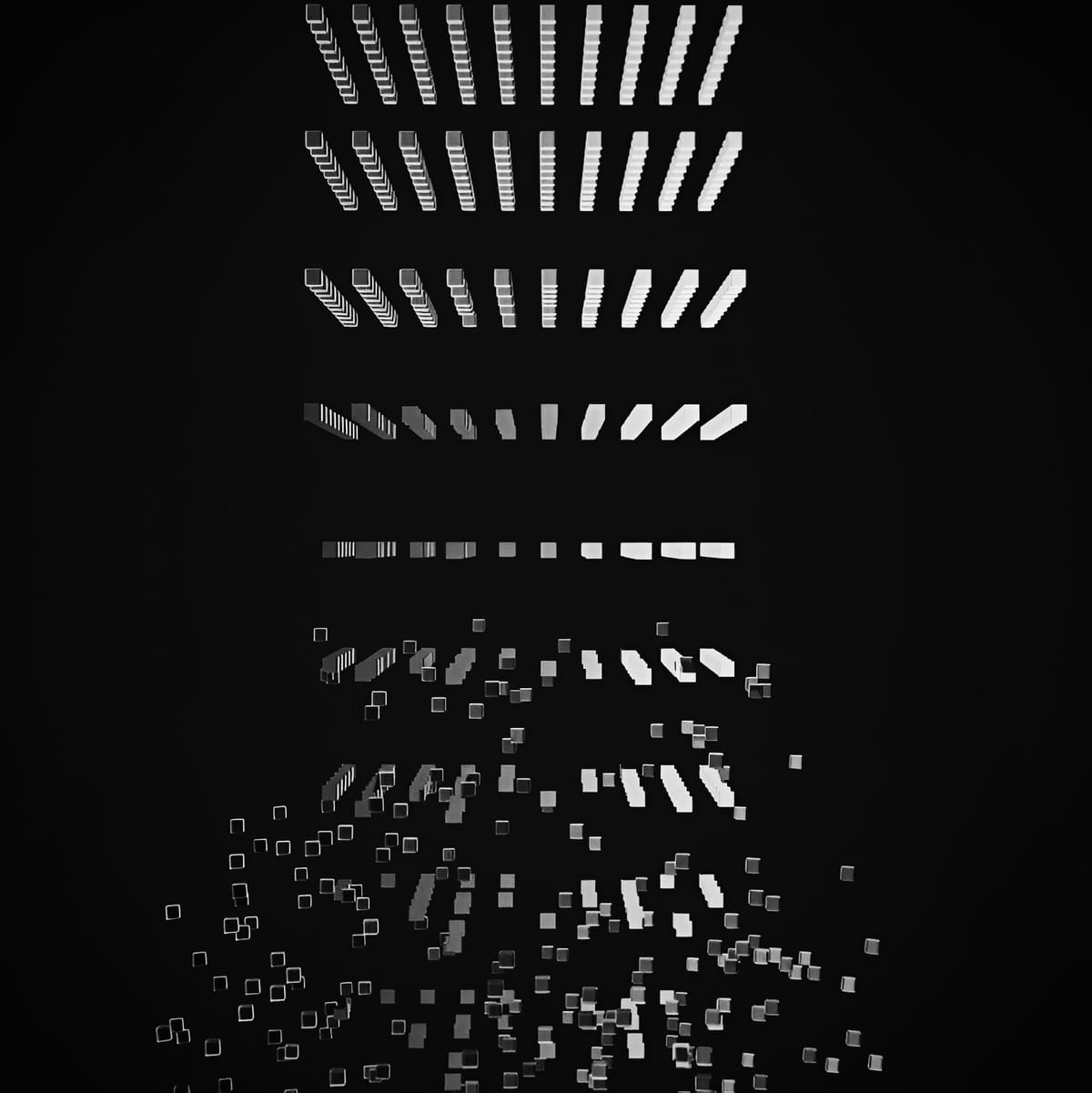
The science shows that entropy is the reason time flows, life exists, and chaos slowly creeps into everything. And what is even more fascinating is that entropy is everywhere, from the mess on your desk to the stars burning in the sky. This is interesting. If you look closely, you do not just see disorder. You see the hidden rules guiding everything, from a broken egg to the fate of the universe.
La ciencia muestra que la entropía es la razón por la que el tiempo fluye, la vida existe y el caos se va infiltrando lentamente en todo. Y lo que es aún más fascinante es que la entropía está en todas partes, desde el desorden en tu escritorio hasta las estrellas que arden en el cielo. Es interesante. Si miras de cerca, no solo ves desorden: ves las reglas ocultas que lo gobiernan todo, desde un huevo roto hasta el destino del universo.
Nauka pokazuje, że entropia jest powodem, dla którego płynie czas, istnieje życie i chaos powoli wkrada się we wszystko. A co jeszcze bardziej fascynujące, entropia jest wszędzie, od bałaganu na twoim biurku po gwiazdy płonące na niebie. To jest interesujące. Jeśli przyjrzysz się uważnie, nie widzisz tylko nieładu. Widzisz ukryte zasady rządzące wszystkim, od stłuczonego jajka po losy wszechświata.
Entropy
Entropy is a measure of the number of possible ways something can be arranged. The more possible "configurations" → the higher the entropy.
Entropy = intuition
- an ordered arrangement (e.g., perfectly stacked blocks) → low entropy
- mess (blocks scattered across the floor) → high entropy
Why?
- there is one way for the blocks to be perfectly arranged;
- there are millions of ways for them to be scattered.
Statistics wins — randomness "prefers" mess.
Why does entropy increase?
Because, statistically, systems:
- more often move into states that have a greater number of possible microstates,
- and rarely return to those "exceptionally ordered" ones.
This is not a "law of mess", but a law of probability.
Entropy = the arrow of time
Time has a direction because:
- we remember the past, not the future,
- an egg can break, but it does not reassemble itself.
Direction in which entropy increases is what we call the "future".
Without entropy:
- there would be no difference between yesterday and tomorrow,
- physics would be "time-symmetric".
Time is an ilussion
This is heavy, but true:
If entropy did not change, time would not exist.
There would be no:
- "now",
- "earlier",
- "later".
There would only be the configuration of the universe.
We do not experience time; we experience the increase of entropy.
Entropy in the universe
How does it work?
- the early universe: low entropy (very smooth),
- today: entropy is increasing (stars burn out, structures fall apart),
- black holes have enormous entropy (the record holders).
In the distant future?
- the so-called heat death of the universe — everything uniform, cold, and boring.
Entropy is the statistical reason why the world ages, time flows, and the universe does not spontaneously return to order.
Let’s turn entropy into a single, coherent story:
from the mess in a room → through time → all the way to the end of the universe.
What is it really?
Imagine a deck of cards.
- A new deck in perfect order → low entropy
- Shuffle it once → entropy increases
- Shuffle it a thousand times → maximum entropy
What is the chance that a randomly shuffled deck will return to perfect order?
Almost zero.
This is entropy: the number of ways something can be "imperfect".
Entropy and information
This is where it gets mind-blowing.
Shannon (information theory):
- information = reduction of uncertainty
- informational entropy = a measure of uncertainty
In other words:
- the higher the entropy → the less information
- perfect order = maximum information
Mess = loss of information.
Entropy in life
Life creates order?
Yes — locally.
Organisms:
- decrease entropy within themselves,
- increase it in their surroundings (heat, waste).
That is why:
- life is possible,
- but only because the entire universe is becoming more chaotic.
We are machines for dispersing energy.
Black holes
Shock:
- a black hole has entropy,
- and it is the largest possible for a given region.
Black hole entropy:
- depends on the surface area of the event horizon,
- not on the volume.
This leads to:
- the holographic principle,
- the question: is the universe "encoded" on its boundary?
Why did the universe start with low entropy?
Becuase:
The Big Bang was hot, but very ordered, which made possible the formation of:
- stars,
- planets,
- life,
- questions like this one.
We do not know why it was that way.
Without this question, there is no cosmology.
The end of everything
If nothing changes:
- entropy will keep increasing,
- temperature differences will disappear,
- there will be no energy left to "do work".
The heat death of the universe.
Entropy is a statistical law that creates time, allows for life, destroys order, and will eventually extinguish the universe.
- Truth = a stabilizer, lowers social and cognitive entropy.
- Lie = introduces uncertainty, raises entropy, and manipulates others’ perception.