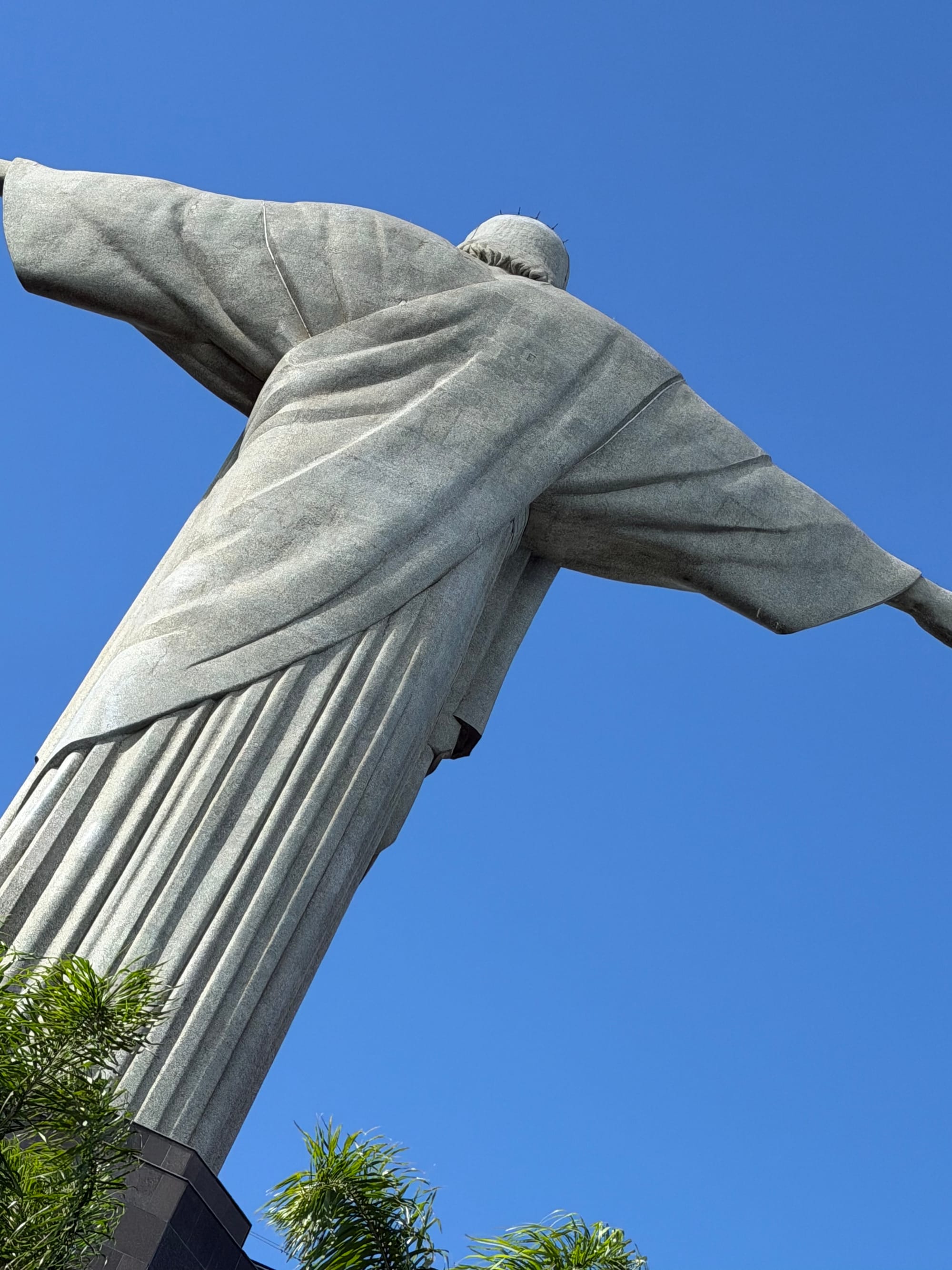
Christ the Redeemer


Rising majestically above Rio de Janeiro from the summit of Corcovado Mountain, Christ the Redeemer is one of the world's most iconic landmarks and an enduring symbol of faith, hope, and national identity. With its outstretched arms overlooking the city, the monument stands as both an architectural marvel and a testament to the history, culture, and spiritual devotion that shaped its creation.
Elevándose majestuosamente sobre Río de Janeiro desde la cima del monte Corcovado, el Cristo Redentor es uno de los monumentos más emblemáticos del mundo y un símbolo perdurable de fe, esperanza e identidad nacional. Con los brazos extendidos sobre la ciudad, el monumento representa tanto una maravilla arquitectónica como un testimonio de la historia, la cultura y la devoción espiritual que dieron forma a su creación.
Wznosząc się majestatycznie ponad Rio de Janeiro ze szczytu góry Corcovado, Chrystus Odkupiciel jest jednym z najbardziej rozpoznawalnych zabytków świata oraz trwałym symbolem wiary, nadziei i tożsamości narodowej. Z rozpostartymi ramionami górującymi nad miastem monument ten stanowi zarówno architektoniczne arcydzieło, jak i świadectwo historii, kultury oraz duchowego oddania, które ukształtowały jego powstanie.
18th century
The mount is now called "Corcovado", due to its shape, which resembles a hump. This name can also be interpreted as a variation of the Latin phrase cor quo vado, which means "heart, where am I going?".
1824
D. Pedro I undertakes the first official expedition to Corcovado Hill, recorded in Debret's canvases.
1859
French priest Pierre-Marie Bos, who had the original idea of building an image of Jesus Christ on Corcovado Hill, arrives in Brazil.
1862–1874
D. Pedro II orders Major Archer to carry out a major reforestation campaign in the Tijuca Forest.
1884
Cosme Velho–Paineiras section of the Corcovado Railroad is inaugurated.
1885
First tourism railway in Latin America, with the opening of the Corcovado station, is completed.
1888
After the Abolition of Slavery, Princess Isabel rejects the proposal for a statue in her honor on Corcovado Hill, and orders the construction of an image of the Sacred Heart of Jesus, who, for her, was the true Redeemer of men.
1889
With the Proclamation of the Republic, Princess Isabel's project is cancelled.
1921
The Catholic Circle, led by General Pedro Carolino Pinto, presents again the idea of building the monument for the celebrations of the Centenary of the Independence of Brazil.
1921
At the fifth meeting of the Catholic Circle, the project by Rio de Janeiro engineer Heitor da Silva Costa is chosen, featuring the image of Jesus on a pedestal, holding a large cross in his left hand and a globe in his right hand.
1922
Under the leadership of the writer Laurita Lacerda, about 20,000 women present a petition to President Epitácio Pessoa, asking for authorization to build the monument.
1923
Dom Sebastião Leme organizes a huge fundraising campaign for the construction of the monument, which is built with donations from the Brazilian people.
1923
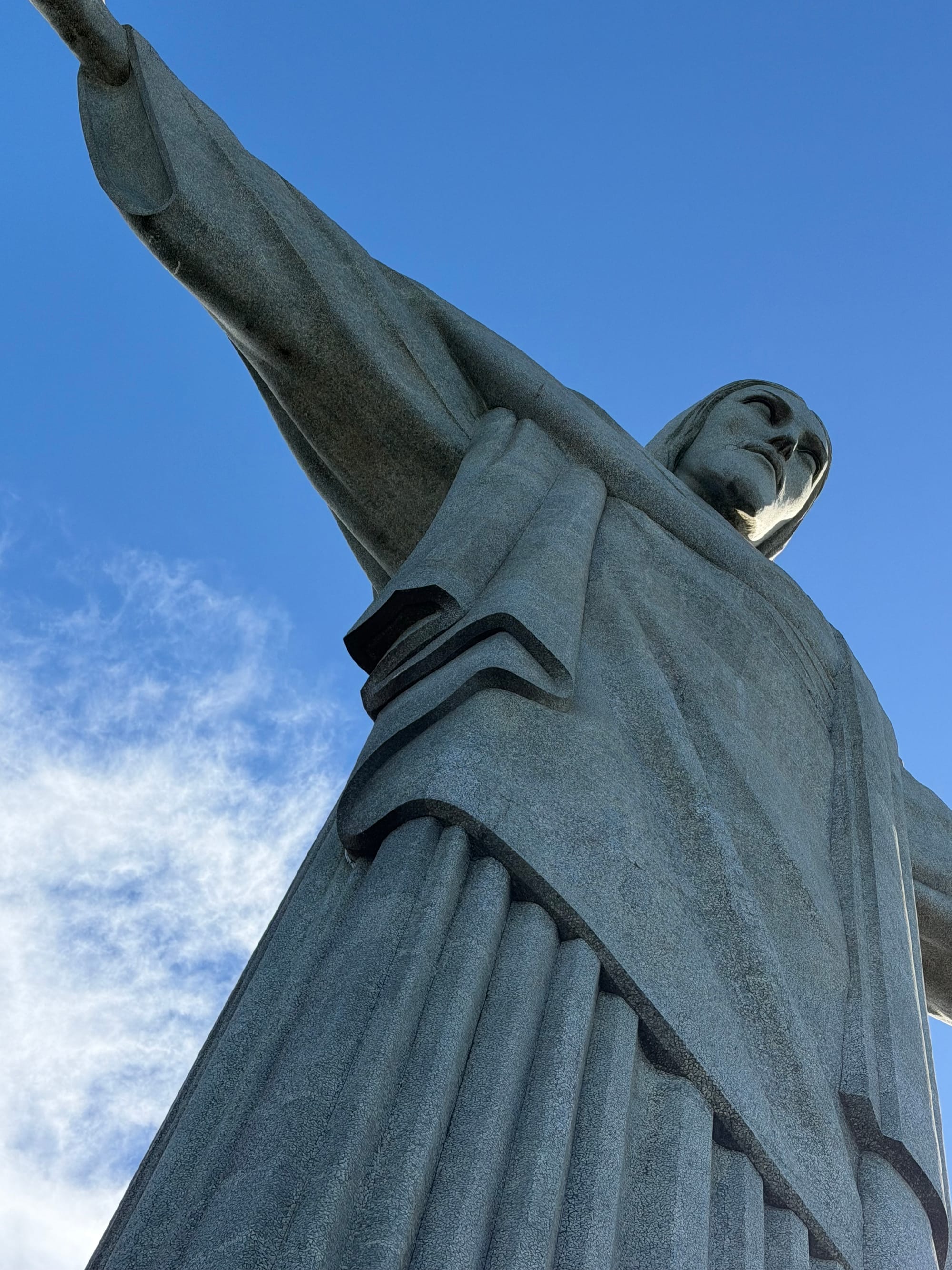
After criticism from the National School of Fine Arts, Dom Sebastião Leme asks Heitor da Silva Costa to change the project, so that it could be seen from afar, with greater religious symbolism. With the help of painter Carlos Oswald, Heitor da Silva Costa designs the image of Jesus with his torso erect and arms outstretched, with the world at his feet.
1924–1926
Heitor da Silva Costa travels to Paris, where he hires the French sculptor Paul Landowski, a specialist in the Art Deco style. Landowski makes a life-size model and sculpture of the head and hands of the monument, whose plaster casts were sent to Brazil in numbered parts. French engineer Albert Caquot performs the structural calculations.
1926–1931
The monument is built in five years, bringing together engineering, architecture and sculpture, thanks to the exquisite work of the workers. Architect Heitor Levy is the foreman and Pedro Fernandes Viana the fiscal engineer.
1927
Before returning to Brazil, Heitor da Silva Costa decides that the reinforced concrete monument be covered with a large mosaic of soapstone, a beautiful material, malleable and resistant to heat, cold and erosion.
1929
Dom Sebastião Leme requests that a simple heart be molded in the chest of the statue, making it a stylized image of the Sacred Heart of Jesus.
October 12, 1931
The monument to Christ the Redeemer is inaugurated on the day of Our Lady Aparecida, patron saint of Brazil, honored with the construction of the monument's chapel.
1934
The Union transfers the domain of the area on the top of Corcovado Hill to the Archdiocesan Order of Christ the Redeemer.
1960
By decree of Dom Jaime de Barros Câmara, the Archdiocesan Order of Christ the Redeemer is integrated into the Archbishop's Mitra of Rio de Janeiro.
1980
Pope John Paul II visits Christ the Redeemer.
2006
By decree of Dom Eusébio Oscar Scheid, the Archdiocesan Sanctuary of Christ the Redeemer is created.
2008
The monument to Christ the Redeemer is listed by the National Historical and Artistic Heritage Institute (IPHAN).
2009
Dom Orani João Tempesta and Dom Gilberto Canavarro dos Reis establish a twinning agreement between the Christ the Redeemer Sanctuary and the National Sanctuary of Cristo Rei, in Portugal.
2021
Christ the Redeemer celebrates 90 years of history.